Once you've established a well-defined trader profile, an initial capital, and a thought-out portfolio, you're ready to begin trading. If you're yet to select a broker, you can find our list of recommended brokers below:
The subsequent step involves crafting an effective money management strategy, a pivotal aspect for achieving more profitable trading. Starting out, it's not about randomly entering and exiting trades with arbitrary position sizes. Money management ensures control over the level of risk you're willing to take and enhances the longevity of your capital.
Position Sizing
Determining the size of your position is crucial, as it dictates how many contracts of a security you'll acquire. There are diverse methods for sizing your positions, but the most prudent approach is one aligned with your risk tolerance. Your position size should be calibrated to avoid losing a specific percentage of your capital.
You can size an investment based on the percentage of capital at risk or consider market volatility. For volatile markets, employing smaller positions helps mitigate risk.
Danger
Avoid adopting aggressive position sizing strategies like martingales, which could lead to rapid depletion of your initial invested capital.
Position Sizing with the Kelly Formula
The Kelly formula aids in determining the percentage of capital suitable for your position size, based on historical performance. It's calculated as follows:
Where represents the percentage of capital for your position, is the probability of a win, and is the ratio of win-to-loss. Assess your past trades for , derived by dividing the number of winning trades by the total trades. can be calculated by dividing average gains by average losses. A negative value implies lower average gains than losses.
Stop Loss
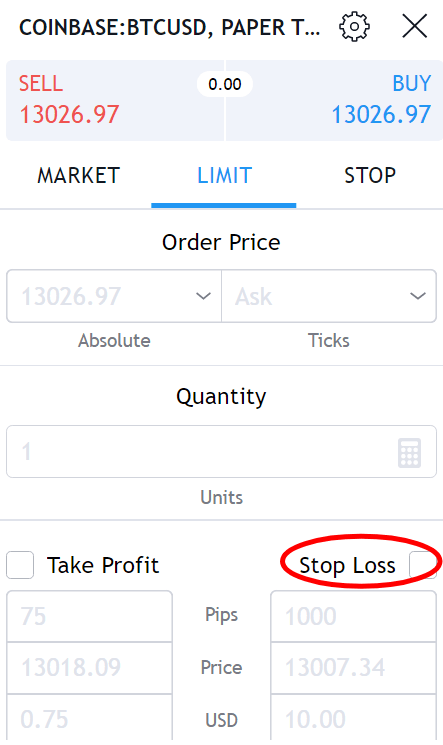
Implementing stop losses safeguards against unexpected price movements. Trading without a stop loss exposes you to volatile shifts that can significantly impact your capital.
Typically set at a specific price level, a stop loss closes your position when that price is reached. Some platforms permit adjusting the distance between the stop loss and the price in pips, dollars, or percentage.
Caution
A triggered stop loss may not be filled at the intended price, potentially leading to unforeseen losses.
Where to Place a Stop Loss?
Your initial capital and risk tolerance heavily influence stop loss placement. If a $10 loss is unacceptable, adjust the stop loss accordingly.
Also, consider volatility; setting a stop loss too close might trigger it prematurely. Allow for variations in price due to volatility.
Tailor your stop loss to your trade horizon and profit target. Longer-term trades necessitate a more distant stop loss.
Trailing Stop Loss
Unlike a standard stop loss, a trailing stop loss adjusts over time and can protect profits. This stop loss is set a certain percentage away from the current price.
Gaps
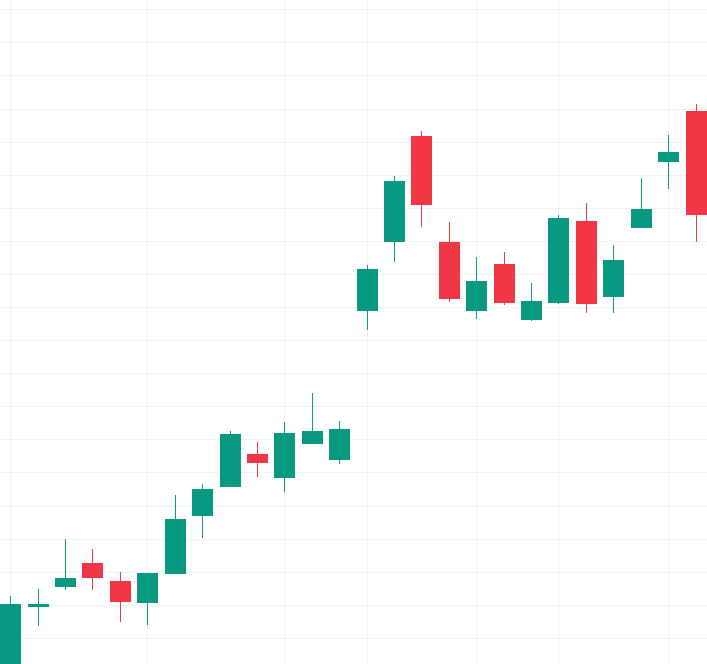
Significant Gap in AMD(D)
Gaps emerge when the opening price differs from the prior close. They're common in the stock market and forex market but nearly absent in the crypto market due to continuous trading.
Gaps can trigger a stop loss at a significantly altered price, adding extra risk. Solutions include closing positions before market close.
Take Profits
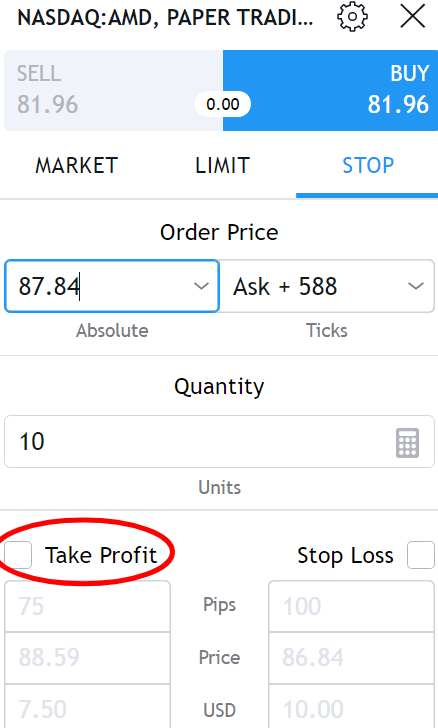
Similar to a stop loss, take profits close positions at a specific price level. However, as the name suggests, they're executed to secure profits, not prevent losses.